The challenge.
In 2005, we set ourselves a challenge: prove that a product can be both commercially desirable and genuinely sustainable. Not one or the other — both.
We chose the most iconic everyday product we could think of: the humble t-shirt.
Sustainable Fashion · Startup · UK
Creating the world's most sustainable garment – with a unique, open-source supply chain.
In 2005, we set ourselves a challenge: prove that a product can be both commercially desirable and genuinely sustainable. Not one or the other — both.
We chose the most iconic everyday product we could think of: the humble t-shirt.
We open-sourced the entire journey — sharing progress in real time, taking input from the community we built around the project.
We explored crops, materials, natural dyes, and published research on the impact of dyeing ('Dyeing for a Change'). We built and audited the whole supply chain ourselves.
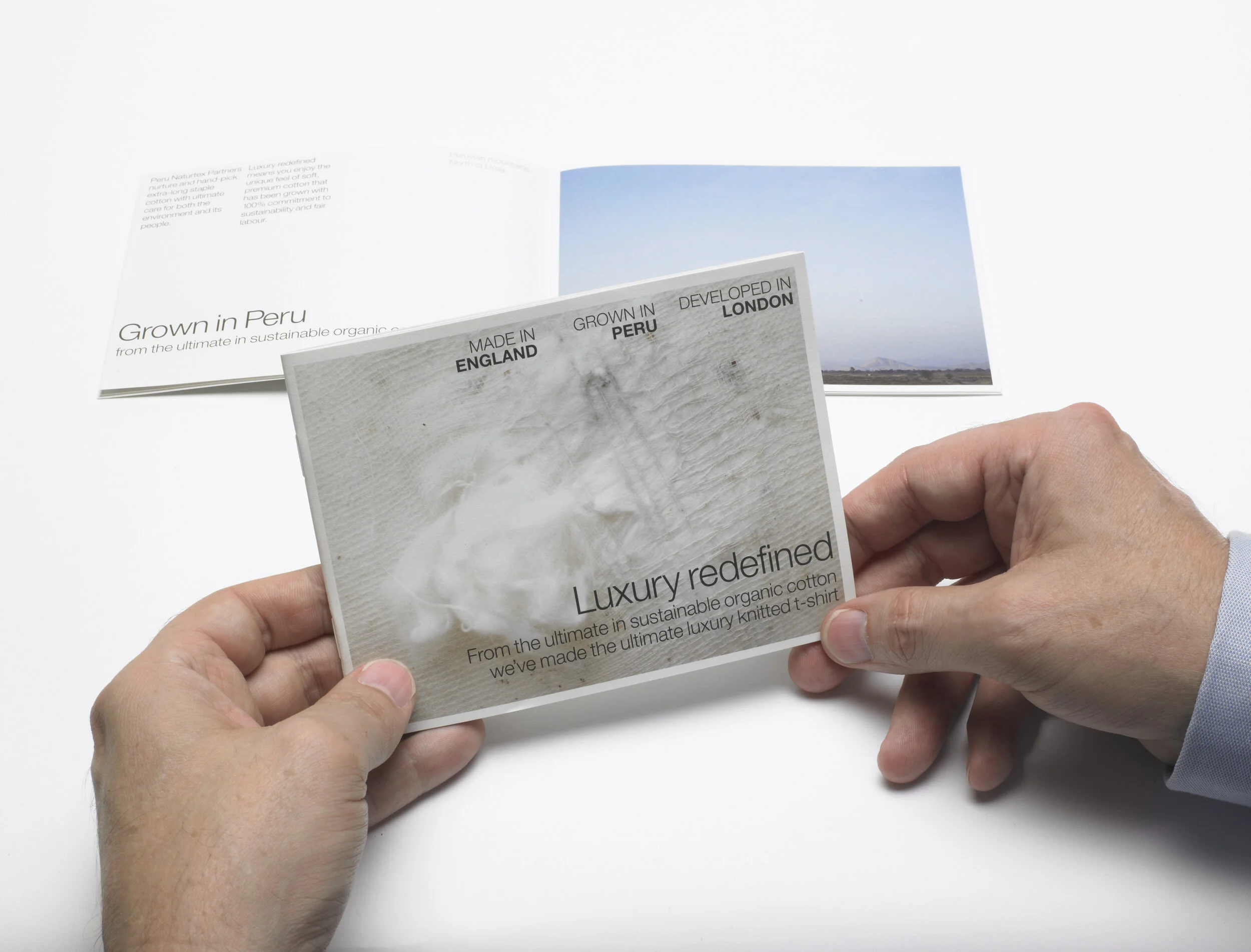
That led us to Peru — the only place in the world where you can find extra-long staple, luxury organic cotton grown without groundwater irrigation. We visited the farms and the fair-trade factory where it's woven into yarn, bringing a photographer so we could share every step with customers and community.
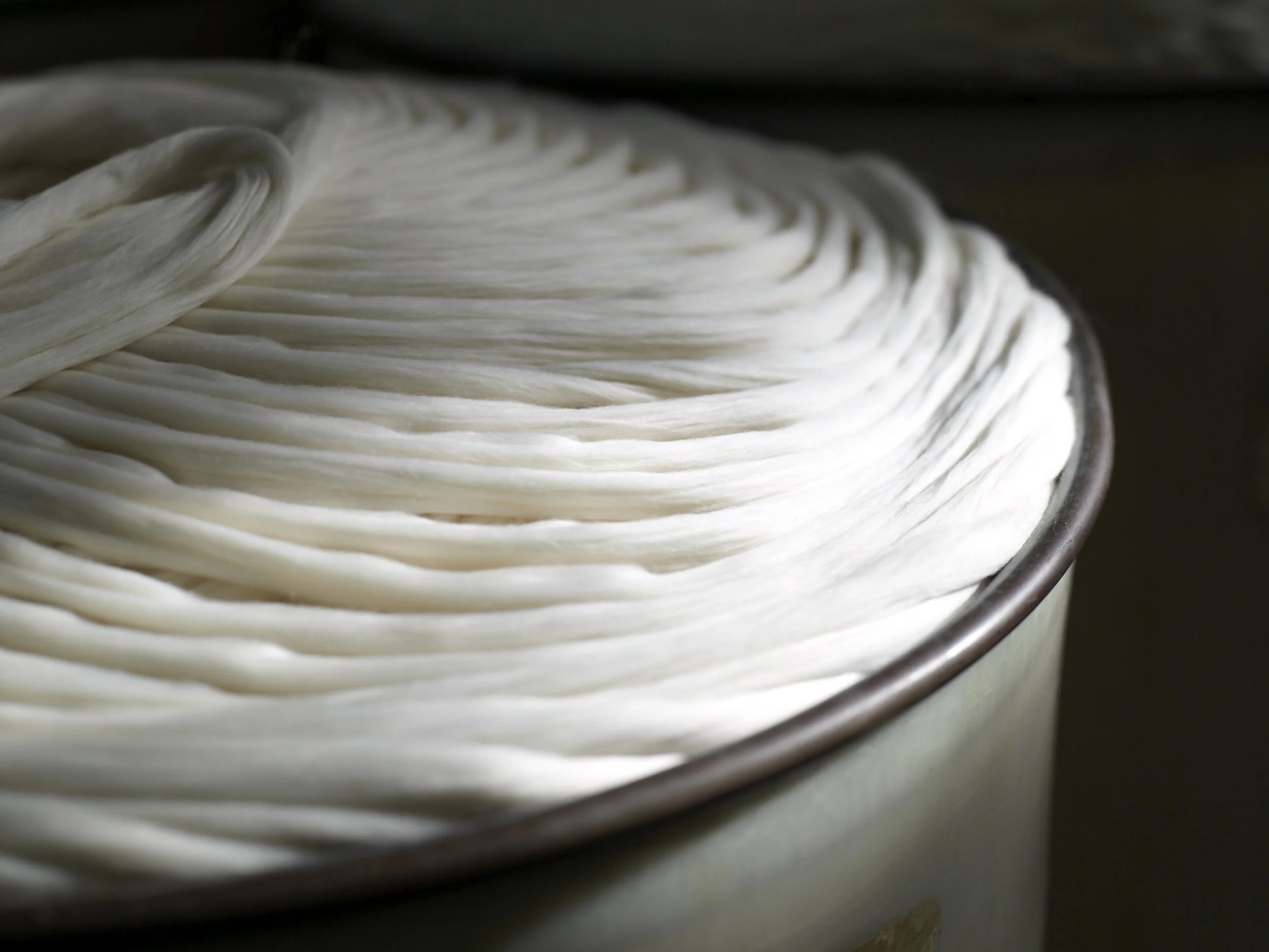
For manufacturing, we chose John Smedley — selecting their knitted cotton technique to create soft, long-lasting t-shirts. The goal was never just sustainable. It was sustainable and desirable.
There are always trade-offs when you're considering every single factor.
Our t-shirt was a luxury product — but it was organic, low-water, fair-trade, CO2-offset, manufactured with green energy, in recyclable packaging, right down to the recycled polyester garment label.
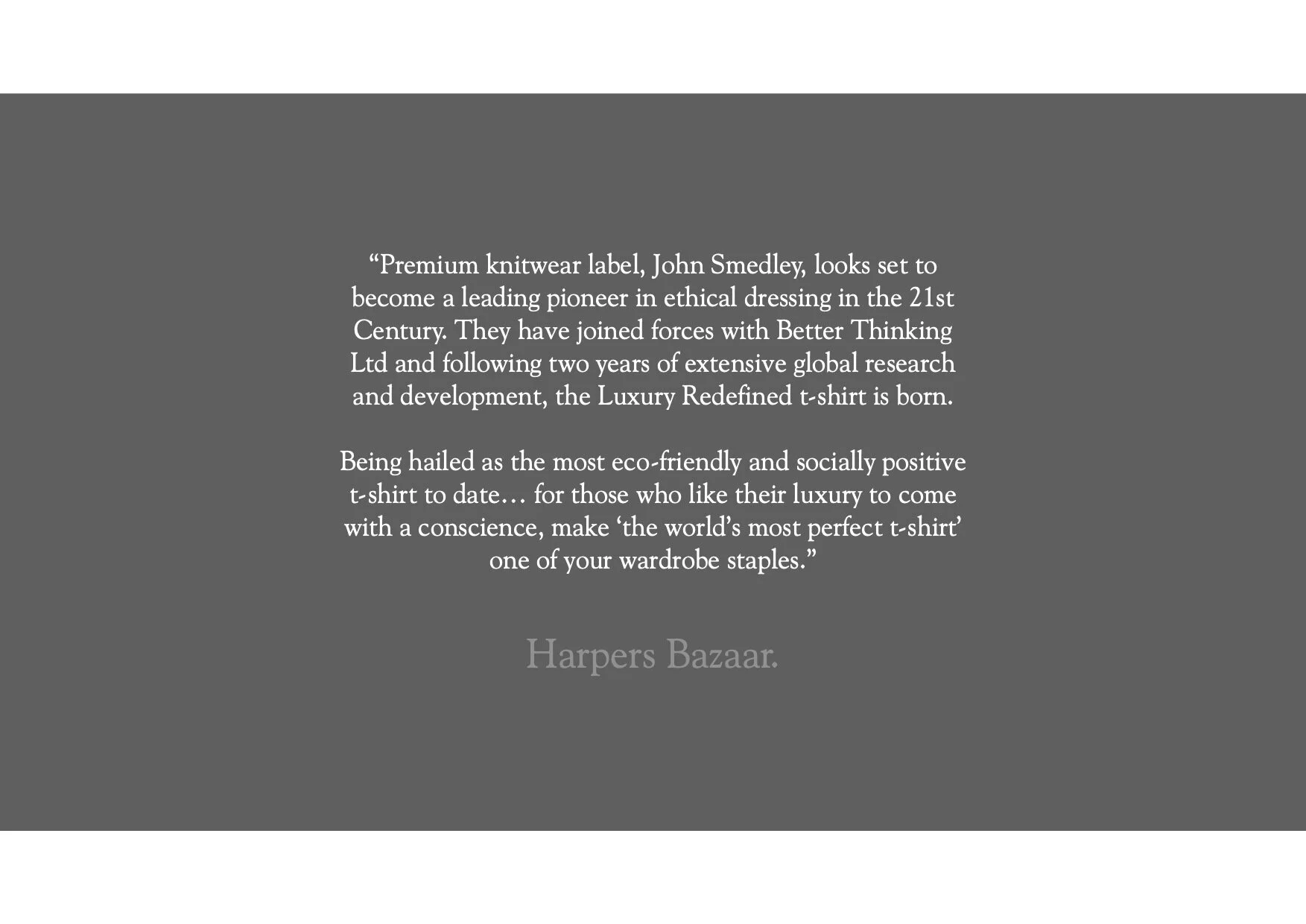
'Luxury Redefined' launched in Selfridges London and stores in Tokyo. It featured in a London Science Museum exhibition, a theatre production in Copenhagen, and coverage by The Guardian and BBC. It was written into university reading lists. We presented the case study to the UK Government working group on sustainable textiles.
A t-shirt became a proof point — that the triple bottom line isn't a trade-off. It's a design challenge.
'The "perfect t-shirt" was recognised as a standard-bearer for sustainable commerce.'