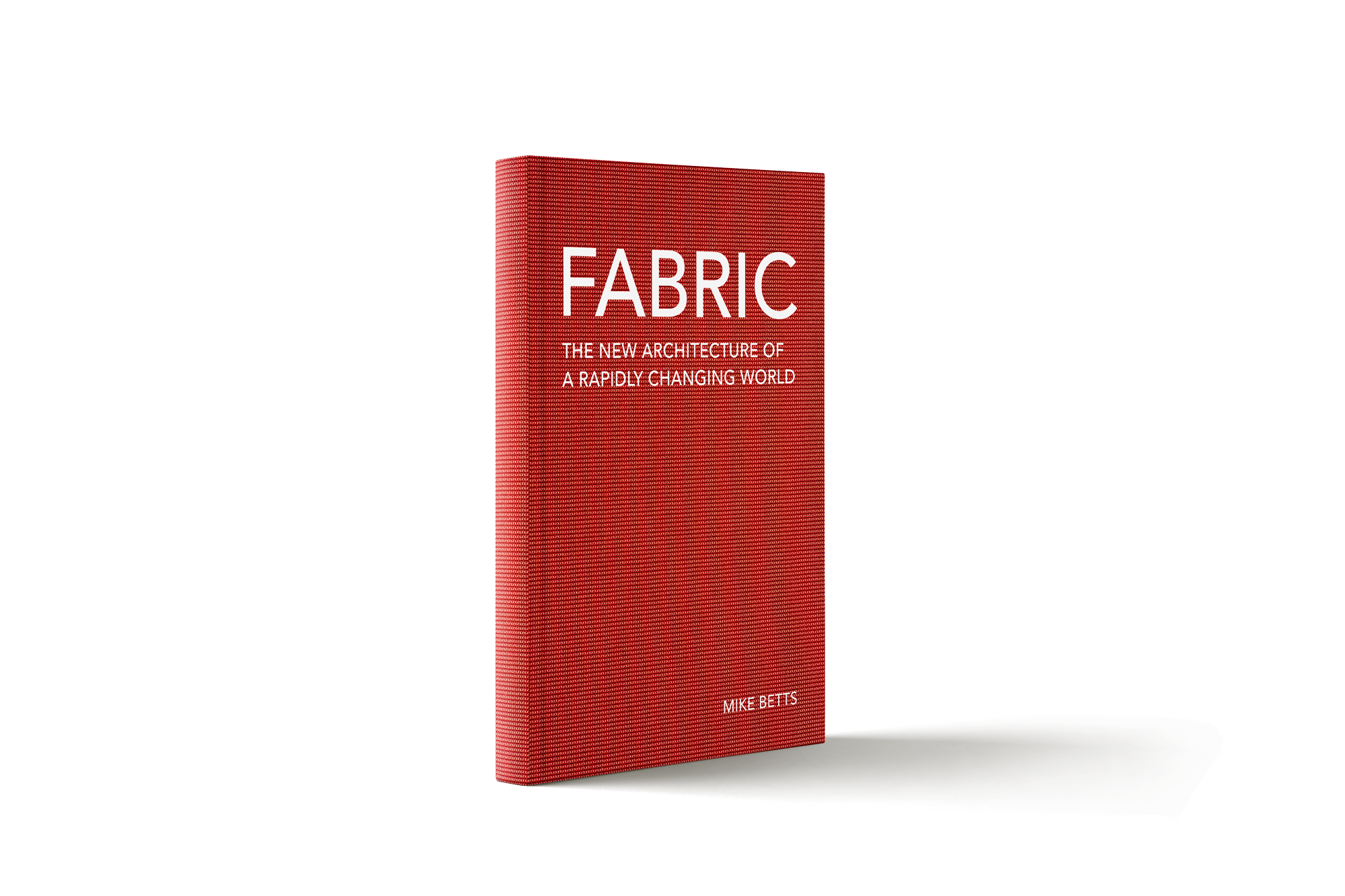
Fabric.
The new architecture of a rapidly changing world.
A book about what's really changing in the age of AI – and the architecture that connects it.
The frameworks and models we use to build businesses were designed for an era of strictly separated functions – marketing, product, operations, finance – each with its own logic, its own models, its own metrics. Generative AI is collapsing the boundaries between them.
'The frameworks we relied on in the past will not get us where we need to go now. Most leaders feel this already – even if they can't yet articulate what comes next.'
The shifts playing out right now cut across several dimensions – and they're worth looking at closely.
AI is already at PhD-level capability in some domains. Voice is becoming the primary input for many of us. Agents are starting to transact with other agents. AI is quietly inserting itself between consumers and the brands they've always chosen directly. Any one of these would be worth taking seriously. Together, happening simultaneously and interacting with each other, they represent something more dramatic.
This book maps those dimensions – and makes the case that they can be navigated.
I started reflecting on these themes long before the current AI era – during a decade of strategy work at AKQA with organisations like MTV, Zalando, Deutsche Telekom. These were already the pivotal elements businesses needed to master for digital transformation. Then when generative AI arrived, I noticed that many of them were not just still relevant but were increasing in importance. AI-specific dimensions came later, layered onto a foundation that had already been tested in practice. The book is evidence-based, not hype-driven. It is forward-looking but grounded. It is written to be accessible beyond any single discipline or industry – because the shifts it describes don't respect those boundaries either.
Research is currently underway. I'm interviewing senior leaders across industries to stress-test and strengthen the thinking. If this resonates, I'd welcome the conversation.
Short field notes and reflections as the research unfolds. Questions worth pondering. I'll email you when I post.